
Midwinter Energy Updates from FCAC
Welcome, winter! We hope you all have been enjoying the cozy season and all the joys that living in Alaska can bring in this season - pink alpenglow on the snow, the northern lights, and gifted homemade eggnog, to name a few. While we find ourselves in the lull between construction season and legislative season, there is still some exciting stuff happening in the energy world that we’re looking forward to sharing with you. In this newsletter, we have a first look at GVEA’s new on-bill financing pilot program, energy bills to watch for in the upcoming legislative session, info on what will be the largest solar farm in Alaska, and some perspective on the wild winds of Interior Alaska. Happy reading, and, as always, give us a shout if you have any questions for us or topics you want to see us include.

GVEA REDUCE program
GVEA is looking for member-owners to use their on-bill financing pilot program. Called Responsible Energy Decisions Using Cost-effective Efficiencies or REDUCE, this program aims to help reduce member-owners’ energy bills by improving energy efficiency and installing renewable energy via low interest loans.
The program is currently only open to homeowners, which unfortunately excludes renters and people with lower income (i.e., the people most in need of this kind of assistance). But, this is a great first step that will hopefully grow to include everyone once a full on-bill financing program is adopted.
The deployment of a full program depends on this pilot program being successful, which means that GVEA needs to see a lot of people using it. If you or someone you know could use some upgrades, now is the time!
To find out more, check out this overview from the Alaska Energy Transparency Project: https://www.akenergytransparency.org/news/gvea-launches-on-bill-financing-pilot-program
To apply:: https://www.gvea.com/services/reduce/

The 2025-2026 legislative session kicks off again on January 20th. Since the legislature operates on a two year cycle, they will be picking up on a number of pieces of legislation from spring 2025. Here are some energy-related items to watch out for.
Reduce oil and gas subsidies - SB 112
SB 112 is a piece of legislation that would reduce oil and gas subsidies by decreasing the “maximum per barrel tax credit” from $8 to $5. It also changes how much oil producers can claim in production tax credits, making it so that they cannot claim more than they spend on capital investments. This could increase state revenue by up to $400 million annually, funding essential public services like education, safety, mental health, energy system upgrades and renewable energy projects.
Closing the “S Corp Loophole” - SB 92
While most large companies in Alaska pay a state corporate income tax, some corporations that are set up as S corporations (“S corps”) do not pay any state income taxes due to a loophole in the state’s tax code. That means that the primary oil and gas corporation in the state, Hilcorp, does not pay any corporate income taxes. This bill would close that loophole by imposing a tax on income over $5 million for oil and gas S corps. Closing this loophole is estimated to bring in over $100 million per year through 2030, funds that are desperately needed for the state budget. Right now, those funds are going to the owner of Hilcorp, a Texas billionaire.
Both of these pieces of legislation (SB 112 and SB 92) have been getting more attention, as legislators are facing the realities of the current state budget shortfall - so this is a great time to demonstrate widespread support for them.
Net Metering - HB 164 and SB 150
Net metering laws allow for an incentive so that utility members who produce their own electricity (typically through rooftop solar) have a way of selling any excess power back to the utility. Alaska does currently have net metering laws, but this legislation would amend those laws to change the amount that utility members are compensated for the excess energy they produce. Additionally, credits could be rolled over through spring of the following year. This would help make net metering work better for our unique circumstances in Alaska, making it so that utility members who produce excess power in the summer could use those credits toward their energy bills in the winter.
This bill has bipartisan support, so showing public support for it can help get it across the finish line.
Renewable Portfolio Standard - HB 153 and SB 149
A Renewable Portfolio Standard (RPS) is a tool that has been used in other states to create targets for utilities to reach certain renewable energy generation goals. This current legislation would require utilities on the railbelt (which mostly encompasses communities on the road system from Fairbanks to Homer) to produce 40% of their energy with renewables by 2030, 55% by 2035, and includes small fines for failing to achieve these goals. This is different from the last piece of RPS legislation proposed, which included a longer term ambitious goal of 80% renewables by 2040, and a shorter term goal of 25% by 2027. This new legislation focuses on medium term and medium-ambition goals.
This bill may have a tougher time making it through the legislature given current challenges to funding utility-scale renewables due to the funding rollbacks of the current presidential administration, but we still think it’s worth strongly supporting, to keep up momentum for this kind of legislation over the next few years.
Fully fund the Renewable Energy Fund
The Renewable Energy Fund issues grants for utilities, municipalities, Tribes, and other groups for renewable energy projects. This fund has resulted in the development of dozens of renewable energy and heating projects across the state. This is a great way to deploy new energy quickly, which is critical given the current energy shortfalls resulting from the Cook Inlet gas crisis. Fully funding the Renewable Energy Fund would help to fill the gap left by the loss of federal funding for renewables, and would lead to greater energy security and economic stimulus across the state.
Due to the current state budget gap, this might be another hard sell for this session, but we're still hopeful!
Don’t fund AK LNG
The AK LNG pipeline is a proposed project which would likely cost upward of $50 billion, running from Alaska's North Slope to Nikiski. Despite the project being economically unfeasible and bad for Alaskans, the Alaska Gasline Development Corporation, the public entity tasked with developing the pipeline, continues to cost the legislature millions every year, with nothing to show for it.
A Final Investment Decision is expected in the next several months. The project still lacks any binding agreements from buyers, a necessity in order for the project to be viable.
Watch out for sneaky ways the legislature may try to keep leaking public money into this project, including in larger funding bills, or using money from other shady non-accountable state entities, like the Alaska Industrial Development and Export Authority (AIDEA).

New major solar project
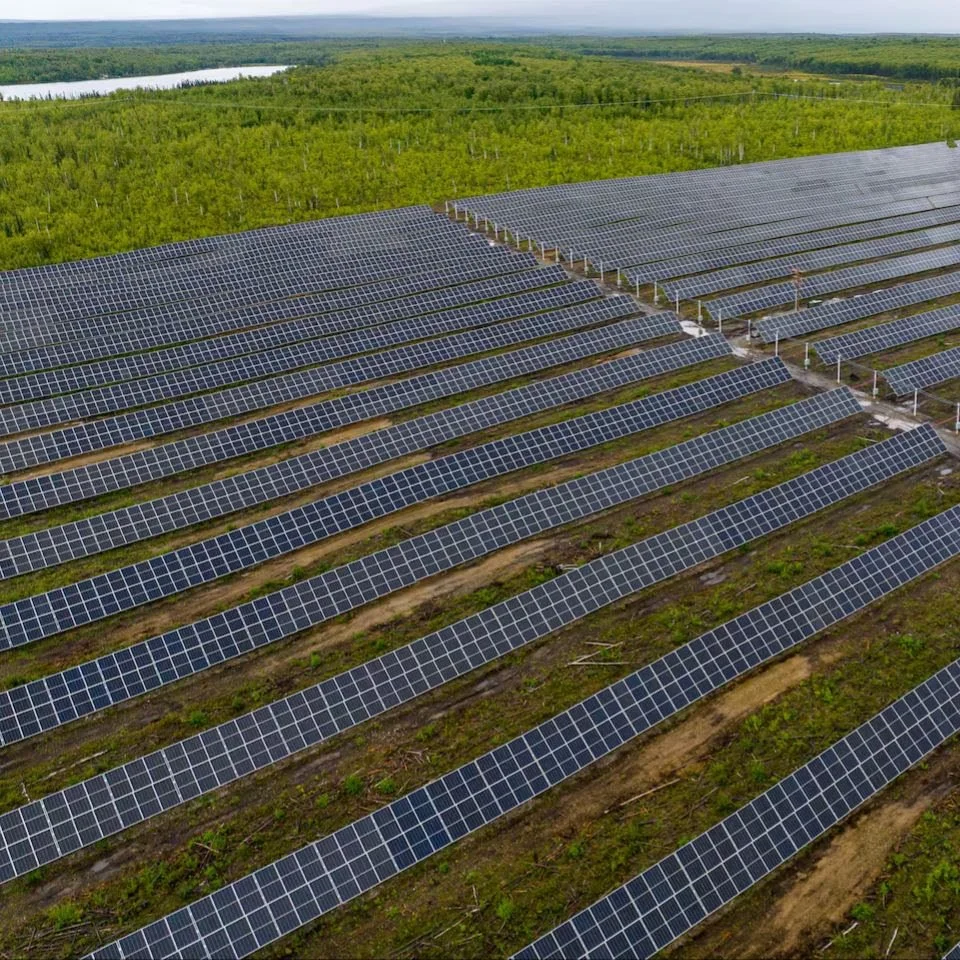
Chugach Electric, the cooperative utility serving the Anchorage area, has voted to move forward with an up-to 10 MW solar project near Tyonek. This will be the largest solar project in Alaska, and is scheduled to be operational by 2027. Notably, a solar farm reduces reliance on natural gas, as the entire Cook Inlet region is facing a natural gas shortage with no concrete plans yet. Read more at Anchorage Daily News.
Wind Speed Tool
Many wind energy detractors claim that there isn’t enough wind in the Interior or during winter for wind energy to be useful. Fairbanks wind developer Mike Craft has shared a tool with us that we can use to see for ourselves if that’s true (note that the tool works best in Chrome).
Most turbines need winds only as fast as 6 mph to produce energy, with advances in technology and design bringing that number lower and lower. As we looked at the map on a random Tuesday - on a modest wind day - huge swaths of land near Healy and Delta Junction exceeded that requirement, getting as high as 17 mph. Even on low wind days, wind speeds hover around 6-7 mph. This means that the people of Healy could remain energy producers as they are now and keep (or even expand on) those energy jobs.
Check it out here: https://zoom.earth/maps/wind-speed/

Become a Member of FCAC!
By signing up for membership, you become part of the climate justice movement in creating a sustainable and equitable future for Alaska. As a member, you can join others and contribute to our coalition projects and campaigns while getting exclusive resources and engaging in opportunities for climate action, community gatherings, organizing training, and leadership development.
https://www.fbxclimateaction.org/membership
Subscribe to keep receiving our energy newsletter!
To make sure you get all our energy updates, subscribe here: https://actionnetwork.org/forms/energy-updates/